
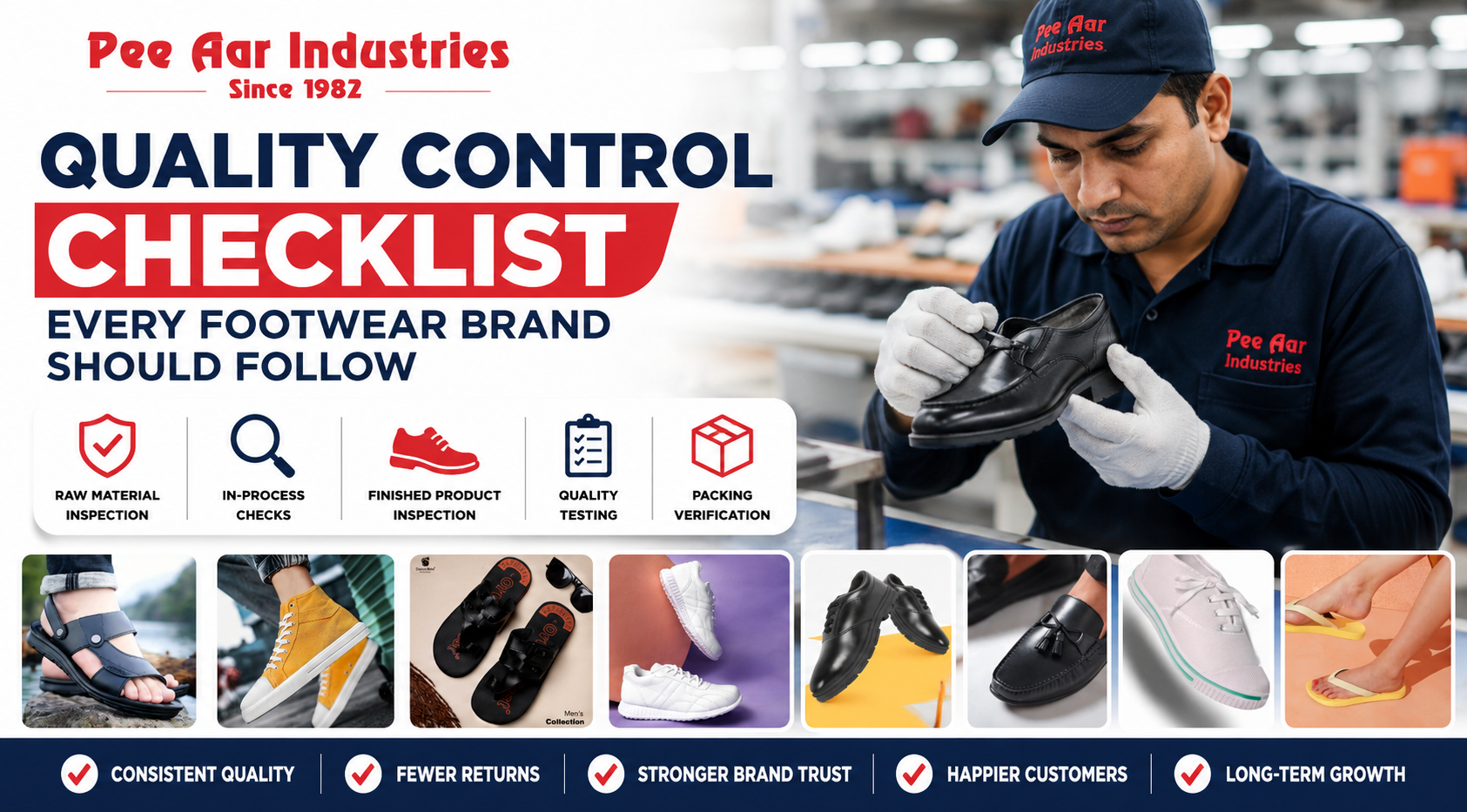
If you’ve been in the footwear business long enough, you already know one truth. A single defective batch can quietly undo months of brand building. Customers don’t always complain. They simply don’t come back.
That’s why having a solid pre-shipment inspection checklist is not just a factory task. It’s a growth strategy.
At Pee Aar Industries, we’ve worked with brands that scaled fast and others that struggled with returns, complaints, and inconsistent quality. The difference almost always comes down to one thing. A disciplined, well-executed quality control system.
This guide walks you through a practical, real-world checklist that footwear brands can use to maintain consistency, protect margins, and build long-term customer trust.
Why Quality Control Is a Revenue Strategy
Many brands still treat quality control as a cost center. That’s a mistake.
Poor quality leads to:
- Higher return rates
- Negative reviews
- Retailer disputes
- Lost repeat customers
On the other hand, strong quality control in footwear leads to:
- Better brand reputation
- Lower operational waste
- Higher customer retention
- Stronger distributor relationships
In simple terms, quality control is marketing that happens before the product reaches the customer.
The Complete Footwear Quality Checklist
Let’s break down a practical checklist that your team can actually follow. This is not theory. This is what works on the factory floor.
1. Raw Material Inspection
Everything starts here. If your materials are inconsistent, no amount of finishing can fix the product.
Check for:
- Leather or synthetic material consistency
- Color uniformity across batches
- Thickness and flexibility
- Adhesive quality
- Sole material durability
Many brands skip detailed incoming inspections to save time. That shortcut often leads to major production losses later.
A strong factory quality control process begins before production even starts.
2. Pattern and Cutting Accuracy
Even a small deviation in cutting can ruin the final fit and appearance.
Checklist:
- Verify pattern alignment
- Ensure symmetry between left and right pairs
- Check cutting precision for edges
- Confirm size grading accuracy
Poor cutting leads to mismatched pairs, which is one of the most common reasons for customer complaints.
3. Stitching and Upper Assembly
This stage directly impacts both aesthetics and durability.
Inspect:
- Stitch density and consistency
- Thread quality and tension
- Alignment of panels
- Reinforcement in stress areas
Loose stitching or uneven seams are classic finishing defects in shoes that customers notice immediately.
4. Lasting Process Control
Lasting defines the shape, comfort, and structure of the shoe.
Ensure:
- Proper alignment on the last
- No wrinkles or folds in the upper
- Even tension during lasting
- Correct toe shape
This stage is critical for fit. If the shape is off, returns will follow.
5. Sole Attachment Strength
This is where many brands face failures.
Checklist:
- Adhesive application consistency
- Pressing time and temperature control
- Bond strength testing
- Edge finishing
Weak bonding results in sole separation, which is one of the fastest ways to damage your brand reputation.
6. Durability Testing Footwear
Before shipment, you must simulate real-world usage.
Key tests include:
- Flex testing
- Abrasion resistance
- Water resistance (if applicable)
- Heel impact testing
Investing in proper durability testing footwear ensures that your product performs well beyond the showroom.
7. Finishing Inspection
This is the stage where customers form their first impression.
Look for:
- Glue marks or stains
- Uneven coloring
- Scratches or dents
- Loose threads
- Poor polishing
Most visible finishing defects in shoes originate from rushed final inspections.
A detailed footwear quality checklist at this stage helps prevent embarrassing customer experiences.
8. Size and Fit Verification
Even if the product looks perfect, incorrect sizing can lead to returns.
Check:
- Size labeling accuracy
- Insole measurements
- Fit consistency across pairs
Consistency in sizing builds trust, especially for online-first brands.
9. Packaging Inspection
Packaging is often underestimated, but it plays a role in perceived quality.
Verify:
- Correct labeling and SKU matching
- Box durability
- Tissue wrapping and presentation
- Barcode accuracy
Damaged or incorrect packaging can lead to retailer rejections.
10. Final Pre-Shipment Inspection
This is your last line of defense.
A proper pre-shipment inspection checklist should include:
- Random sampling based on batch size
- AQL (Acceptable Quality Level) standards
- Visual and functional checks
- Documentation and reporting
This step ensures you avoid defective shoe batches before they reach the market.
Common Mistakes Brands Make
Even experienced brands fall into these traps.
Rushing Production Timelines
Speed often compromises inspection quality. Deadlines matter, but not at the cost of consistency.
Skipping Mid-Production Checks
Waiting until the final stage to inspect products is risky. Issues become harder and more expensive to fix.
Lack of Standardization
Without a documented factory quality control process, different teams follow different standards.
Ignoring Supplier Quality
Your final product is only as good as your weakest supplier.
How Pee Aar Industries Helps Brands Get It Right
At Pee Aar Industries, we understand that quality control is not just about checking boxes. It’s about building a system that works every single time.
We support brands with:
- Structured inspection protocols
- Advanced durability testing footwear methods
- Skilled quality control teams
- End-to-end production monitoring
Our approach ensures that brands not only meet quality standards but exceed customer expectations.
Turning Quality into a Competitive Advantage
Here’s something many brands overlook. Customers may not always notice perfection, but they always notice inconsistency.
When your product quality is reliable:
- Customers reorder without hesitation
- Retailers trust your shipments
- Your brand builds credibility over time
That’s how strong quality control in footwear turns into long-term business growth.
Final Thoughts
A well-defined pre-shipment inspection checklist is not optional anymore. It’s essential for survival in a competitive footwear market.
If you want to scale your brand without increasing returns, complaints, and operational chaos, you need a system that ensures consistency at every stage.
Start with a clear checklist. Train your team. Audit your process regularly.
And most importantly, never compromise on quality to save short-term costs. It always comes back, usually in the form of lost customers.
FAQs
1. What is a pre-shipment inspection checklist in footwear?
It is a structured process used to evaluate finished products before dispatch to ensure they meet quality, safety, and design standards.
2. Why is durability testing footwear important?
It helps simulate real-world usage and ensures the product can withstand wear and tear, reducing returns and complaints.
3. What are common finishing defects in shoes?
Glue marks, uneven stitching, scratches, and poor polishing are some of the most common defects seen in footwear.
4. How does a factory quality control process improve brand reputation?
It ensures consistent product quality, which leads to better customer satisfaction and repeat purchases.
5. How can brands avoid defective shoe batches?
By implementing multi-stage inspections, using a detailed checklist, and conducting strict pre-shipment evaluations before dispatch.
Add a Comment