
A Contract Shoe Manufacturer plays a vital role in helping footwear brands produce high-quality shoes while maintaining consistency and scalability. Building a successful footwear brand requires more than great designs and effective marketing. The quality, consistency, and reliability of your manufacturing process can directly impact customer satisfaction and long-term growth. This is why selecting the right contract shoe manufacturers is one of the most important decisions a footwear business can make. Whether you are launching a new product line or expanding an established brand, partnering with the right manufacturer can help you maintain quality standards, manage costs, and scale production efficiently.
With numerous factories and suppliers available across the global footwear market, making the right choice can feel overwhelming. Understanding what to evaluate before signing a manufacturing agreement can save your business from costly mistakes and production challenges. This guide outlines the key factors every brand should consider when choosing a contract shoe manufacturer. Choosing the right Contract Shoe Manufacturer can significantly impact your brand’s long-term growth and reputation.
Why Choosing the Right Contract Shoe Manufacturer Matters
Before approaching any manufacturer, it is essential to clearly define your business needs. Different manufacturers specialize in different product categories, production volumes, and construction techniques. Some focus on athletic footwear, while others excel in casual shoes, formal footwear, sandals, or specialized products.
Create a detailed outline of your requirements, including:
- Product categories
- Material preferences
- Expected production volumes
- Target price range
- Quality expectations
- Delivery timelines
- Packaging requirements
Having a clear vision allows manufacturers to determine whether they can meet your expectations and helps you compare suppliers more effectively.
Evaluate Manufacturing Experience
Experience often reflects a manufacturer’s ability to handle challenges and maintain consistent quality. A company with years of industry expertise is likely to have refined production processes, trained personnel, and established quality control systems.
Ask potential manufacturers about:
- Years in operation
- Types of footwear produced
- Existing production capabilities
- Previous client experience
- Export and international shipping experience
Experienced manufacturers typically understand market demands and can offer valuable recommendations regarding materials, construction methods, and production efficiency.
Assess Production Capacity
Production capacity is a critical consideration when selecting a manufacturing partner. A factory that cannot keep up with your growth may create supply chain disruptions and inventory shortages.
Many successful brands work with contract shoe manufacturers that have scalable production capabilities and modern equipment. A manufacturer should be able to accommodate both your current production requirements and future expansion plans.
When evaluating capacity, consider:
- Daily production output
- Workforce size
- Factory infrastructure
- Machinery and technology
- Seasonal production fluctuations
A well-equipped facility can often maintain better consistency while handling large production volumes.
Review Quality Control Processes
Quality is one of the most important factors influencing customer satisfaction and brand reputation. Even a small defect rate can lead to customer complaints, product returns, and negative reviews.
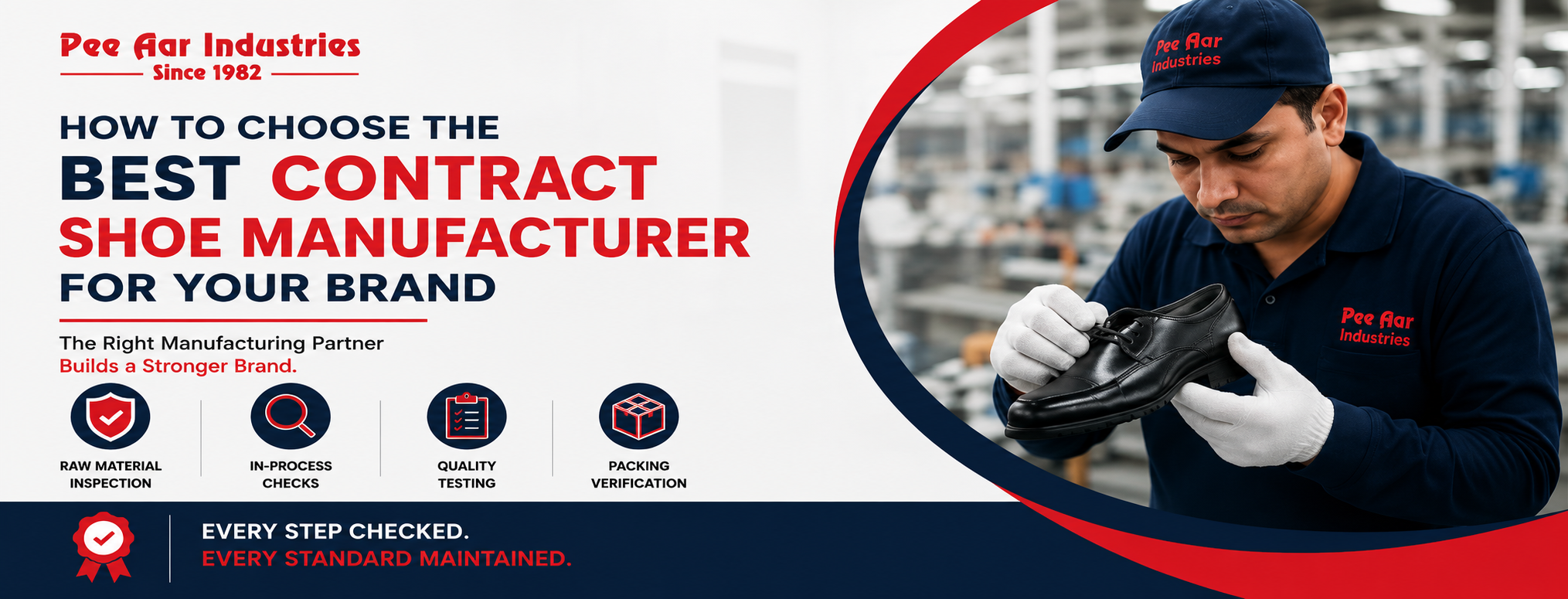
Request information about the manufacturer’s quality control procedures. Reliable factories typically conduct inspections at multiple stages of production, including:
- Raw material inspection
- In-process quality checks
- Final product inspection
- Packaging verification
Strong quality management systems help ensure that every product meets established specifications before shipment.
Analyze Material Sourcing Capabilities
The quality of footwear depends heavily on the materials used during production. Manufacturers with reliable sourcing networks can provide better consistency and greater flexibility in material selection.
Discuss available material options, including:
- Synthetic materials
- Leather alternatives
- Textile fabrics
- Rubber compounds
- Foam technologies
- Sustainable material choices
Understanding sourcing capabilities can also help you evaluate production costs and lead times.
Consider Footwear Contract Manufacturing Expertise
For many growing brands, footwear contract manufacturing offers an efficient way to bring products to market without investing in their own production facilities. This approach allows businesses to focus on branding, product development, and sales while leveraging the manufacturer’s production expertise.
However, not all factories offer the same level of service. Look for manufacturers that provide comprehensive support, including design assistance, sampling, testing, production planning, and logistics coordination. A full-service approach can simplify operations and reduce administrative complexity.
Evaluate Product Development and Sampling
The ability to create accurate prototypes and samples is an important indicator of manufacturing capability. Sampling allows brands to evaluate quality, fit, comfort, and design execution before committing to large production runs.
A reliable manufacturer should provide:
- Prototype development
- Sample revisions
- Material recommendations
- Technical guidance
- Design feedback
The sampling stage also helps establish communication patterns and evaluate responsiveness before entering a long-term partnership.
Examine Private Label Capabilities
Many emerging brands rely on a private label footwear factory to develop and manufacture products under their own brand identity. Private labeling can accelerate product launches while reducing development costs.
When evaluating private label services, inquire about:
- Branding options
- Custom packaging
- Label customization
- Product modifications
- Minimum order quantities
The ability to customize products effectively can help differentiate your brand in a competitive marketplace.
Verify Communication and Transparency
Clear communication is essential for successful manufacturing partnerships. Delays, misunderstandings, and quality issues often arise when communication channels are weak.
A dependable manufacturer should provide:
- Dedicated account management
- Regular production updates
- Transparent pricing
- Clear timelines
- Prompt responses to inquiries
Strong communication creates trust and enables faster problem resolution throughout the production process.
Assess Your Shoe Production Partner’s Reliability
Every brand needs a dependable shoe production partner capable of delivering products on time and according to specifications. Reliability affects inventory planning, retail relationships, and customer satisfaction.
Review indicators such as:
- Delivery performance history
- Production scheduling practices
- Client testimonials
- Repeat business relationships
- Contingency planning procedures
Reliable manufacturers often maintain long-term partnerships because they consistently meet commitments and deadlines.
Evaluate Footwear Supplier Selection Criteria
Making the right footwear supplier selection decision involves more than comparing prices. While cost is important, choosing the cheapest option can sometimes result in lower quality, delayed shipments, or limited support.
Develop a comprehensive evaluation framework that includes:
- Quality standards
- Production capacity
- Communication effectiveness
- Compliance practices
- Technical expertise
- Delivery reliability
- Pricing structure
Using a balanced assessment approach helps identify manufacturers that provide long-term value rather than short-term savings.
Consider Geographic Advantages
Location can influence production efficiency, logistics, shipping costs, and supply chain management. Many footwear brands seek a reliable manufacturing partner India because of the country’s established footwear ecosystem, skilled workforce, and growing manufacturing infrastructure.
Geographic proximity to suppliers, ports, and transportation networks can improve operational efficiency and reduce lead times. Understanding a manufacturer’s location advantages can contribute to smoother production and distribution processes.
Review Compliance and Ethical Standards
Modern consumers increasingly expect brands to maintain ethical and responsible supply chains. Before selecting a manufacturer, verify compliance with labor regulations, workplace safety standards, and environmental requirements.
Important considerations include:
- Employee welfare practices
- Workplace safety measures
- Environmental policies
- Regulatory compliance
- Product testing standards
Manufacturers that prioritize responsible operations help protect both your brand reputation and customer trust.
Visit the Facility Whenever Possible
A factory visit provides valuable insight into day-to-day operations that may not be evident through online communications. Observing production processes firsthand can help verify capabilities and assess overall professionalism.
During a visit, pay attention to:
- Cleanliness and organization
- Equipment condition
- Workforce efficiency
- Quality control procedures
- Material storage practices
A well-managed facility often reflects strong operational discipline and commitment to quality.
Build a Long-Term Partnership
The best manufacturing relationships extend beyond transactional business arrangements. A strong partnership can lead to better pricing, improved product development, faster production cycles, and greater flexibility.
Manufacturers that understand your brand goals are often better equipped to support future growth and innovation. Investing time in relationship building can create long-term advantages for both parties.
Pee Aar Industries: Powering Your Footwear Brand with Trusted Manufacturing Excellence
At Pee Aar Industries, we understand how critical it is to choose the right manufacturing partner when building a footwear brand. As discussed in the blog, quality, consistency, and reliability define long-term success. We support brands with scalable production, advanced machinery, and strict quality control across every stage of manufacturing. Our team works closely with clients to deliver customized footwear solutions that align with market needs. With us, you gain a dependable partner focused on innovation, precision, and sustainable growth.
Conclusion
Choosing the right footwear manufacturer requires careful evaluation of quality standards, production capabilities, communication practices, and long-term reliability. By conducting thorough research and assessing each potential partner against your business objectives, you can establish a manufacturing relationship that supports sustainable growth. The most successful brands often work with trusted contract shoe manufacturers that consistently deliver quality products, dependable service, and scalable production solutions that evolve alongside the brand’s future ambitions.
Add a Comment