
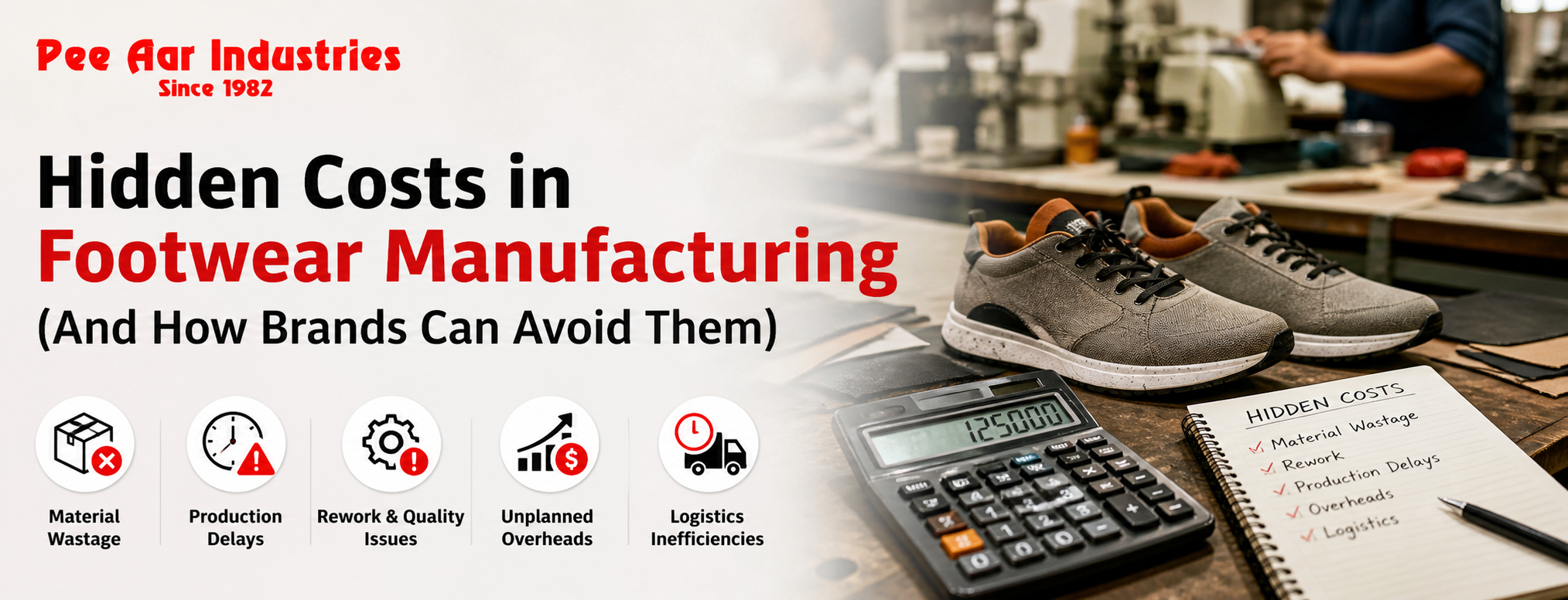
When brands step into footwear manufacturing, the focus is often on design, materials, and pricing. On paper, everything looks predictable. Quotes are approved, timelines are set, and margins appear healthy. Yet, somewhere between sampling and final delivery, costs begin to creep in quietly. By the time production wraps up, profits are thinner than expected.
This is where most brands feel the pinch. The problem is not just rising expenses. It is the lack of visibility. Understanding the hidden costs in shoe manufacturing is not just about saving money. It is about building a smarter, more resilient business.
At Pee Aar Industries, we have worked closely with brands that faced these exact challenges. The difference between brands that scale and those that struggle often comes down to one thing. Cost awareness.
Let’s break down the hidden costs that often go unnoticed and how you can avoid them with better planning and footwear cost transparency.
1. Sampling Costs That Spiral Out of Control
Sampling is essential. It brings your design to life. But it is also one of the first areas where costs start to drift.
Many brands underestimate how many iterations are needed before final approval. Each change in material, sole structure, or stitching detail can add to the cost. Frequent revisions not only increase expenses but also delay timelines.
How to avoid it
Start with highly detailed tech packs. The clearer your instructions, the fewer revisions you will need. Collaborate with manufacturers early to validate feasibility before sampling begins. This reduces trial and error.
2. Material Waste and Inefficient Sourcing
Material costs are often quoted upfront, but waste is rarely discussed. Poor cutting techniques, inconsistent material quality, or last minute design changes can lead to significant wastage.
For example, leather and specialized fabrics require precision. Even small inefficiencies can add up when scaled across thousands of units.
How to avoid it
Work with manufacturers who optimize material usage through advanced cutting techniques. Standardize materials wherever possible. Bulk sourcing not only reduces cost per unit but also minimizes variation.
This is where footwear cost transparency becomes critical. Ask for a breakdown of material utilization, not just pricing.
3. Tooling and Mold Expenses
Custom soles, heels, and outsoles often require molds. These are one time investments, but they can be expensive. What many brands miss is the cost of modifications.
If your design changes after molds are created, you may need to rework or completely replace them. That is a significant unplanned expense.
How to avoid it
Finalize designs before tooling begins. Use 3D prototypes or digital simulations to test concepts. A small investment upfront can prevent major losses later.
4. Production Delays and Idle Time
Time is money in manufacturing. Delays caused by unclear specifications, late approvals, or supply chain disruptions can lead to idle production lines.
Manufacturers may charge for these delays or pass the cost indirectly through higher pricing in future orders.
How to avoid it
Create a clear production calendar with milestones. Maintain constant communication with your manufacturing partner. Reliable timelines reduce uncertainty and hidden costs.
5. Quality Control Failures
Skipping or rushing quality checks can lead to defective products. Returns, replacements, and damaged brand reputation cost far more than proper quality control.
Inconsistent quality also affects customer trust, which impacts long term revenue.
How to avoid it
Invest in strict quality control processes at every stage. From raw material inspection to final packaging, every step should be monitored. Partner with manufacturers who prioritize quality as much as you do.
Avoiding these manufacturing mistakes to avoid can save both money and brand credibility.
6. Packaging and Labeling Overruns
Packaging is often treated as a minor detail. In reality, it can significantly impact costs. Custom boxes, branding elements, and labeling requirements vary across markets.
Last minute changes or non compliant packaging can lead to rework, delays, or even penalties.
How to avoid it
Standardize packaging early in the process. Understand regulatory requirements for your target markets. Efficient packaging design can also reduce shipping costs.
7. Logistics and Freight Surprises
Shipping costs are rarely static. Fuel prices, route changes, and global disruptions can all impact freight charges.
Many brands overlook the full scope of logistics, including warehousing, customs duties, and last mile delivery. This is where the anchor text comes into play: import/export cost footwear is often underestimated, yet it can heavily influence your final pricing.
How to avoid it
Plan logistics as part of your overall cost strategy, not as an afterthought. Work with experienced partners who understand international shipping and compliance. Transparent discussions about shipping scenarios help you prepare for fluctuations.
8. Compliance and Certification Costs
Different markets have different standards. Safety regulations, labeling norms, and environmental compliance can all add to manufacturing costs.
Failing to meet these requirements can result in fines, shipment rejections, or product recalls.
How to avoid it
Stay informed about compliance requirements in your target markets. Choose manufacturing partners who are familiar with global standards. This ensures smoother market entry and fewer unexpected costs.
9. Communication Gaps and Misalignment
One of the most overlooked hidden costs is poor communication. Misunderstandings between brands and manufacturers can lead to errors, rework, and delays.
Even small misalignments in expectations can escalate into significant expenses.
How to avoid it
Establish clear communication channels. Regular updates, detailed documentation, and quick feedback loops make a huge difference. A collaborative approach reduces errors and improves efficiency.
10. Scaling Without Cost Control
As brands grow, production volumes increase. While this should ideally reduce costs per unit, the opposite often happens due to inefficiencies.
Without proper systems in place, scaling can amplify hidden costs rather than eliminate them.
How to avoid it
Build scalable processes from the beginning. Track costs at every stage and identify areas for improvement. Data driven decisions help maintain profitability as you grow.
Why Footwear Cost Transparency Matters
Transparency is not just a buzzword. It is a competitive advantage.
When you understand where your money is going, you can make better decisions. You can negotiate smarter, plan more effectively, and avoid unpleasant surprises.
At Pee Aar Industries, we believe that footwear cost transparency is the foundation of successful manufacturing partnerships. Brands that demand clarity are better positioned to scale sustainably.
The Role of the Right Manufacturing Partner
Not all manufacturers operate the same way. Some focus only on production, while others act as strategic partners.
Choosing the right partner can make a significant difference in controlling the hidden costs in shoe manufacturing.
A reliable partner will
- Provide detailed cost breakdowns
- Offer insights to optimize production
- Help you avoid common manufacturing mistakes to avoid
- Ensure consistent quality and timely delivery
This level of collaboration goes beyond transactions. It builds trust and long term success.
Final Thoughts
Hidden costs are not always obvious, but they are always impactful. Ignoring them can erode margins and limit growth.
The good news is that most of these costs are avoidable. With the right approach, clear communication, and a focus on transparency, brands can take control of their manufacturing process.
If you are serious about building a strong footwear brand, start by asking the right questions. Where are the costs coming from? What can be optimized? Who can guide you better?
Pee Aar Industries works with brands that want clarity, efficiency, and growth. Because in footwear manufacturing, what you do not see can cost you the most.
FAQs
1. What are the most common hidden costs in shoe manufacturing?
The most common hidden costs include excessive sampling revisions, material wastage, tooling changes, quality control failures, and unexpected logistics or import/export expenses. These costs often arise due to poor planning or lack of transparency.
2. How can footwear brands improve cost transparency?
Brands can improve footwear cost transparency by requesting detailed cost breakdowns, maintaining clear communication with manufacturers, and tracking expenses across every production stage from sourcing to delivery.
3. Why do sampling costs increase so quickly?
Sampling costs rise due to multiple design revisions, unclear specifications, and material changes. Each modification requires additional time, labor, and resources, which adds to the overall expense.
4. How can brands avoid common manufacturing mistakes?
Brands can avoid manufacturing mistakes by preparing detailed tech packs, finalizing designs before production, choosing experienced partners, and implementing strict quality control processes.
5. How do logistics and import/export costs impact footwear pricing?
Logistics and import/export cost footwear factors such as shipping rates, customs duties, and delays can significantly increase overall expenses, affecting profit margins if not planned properly.
Add a Comment