
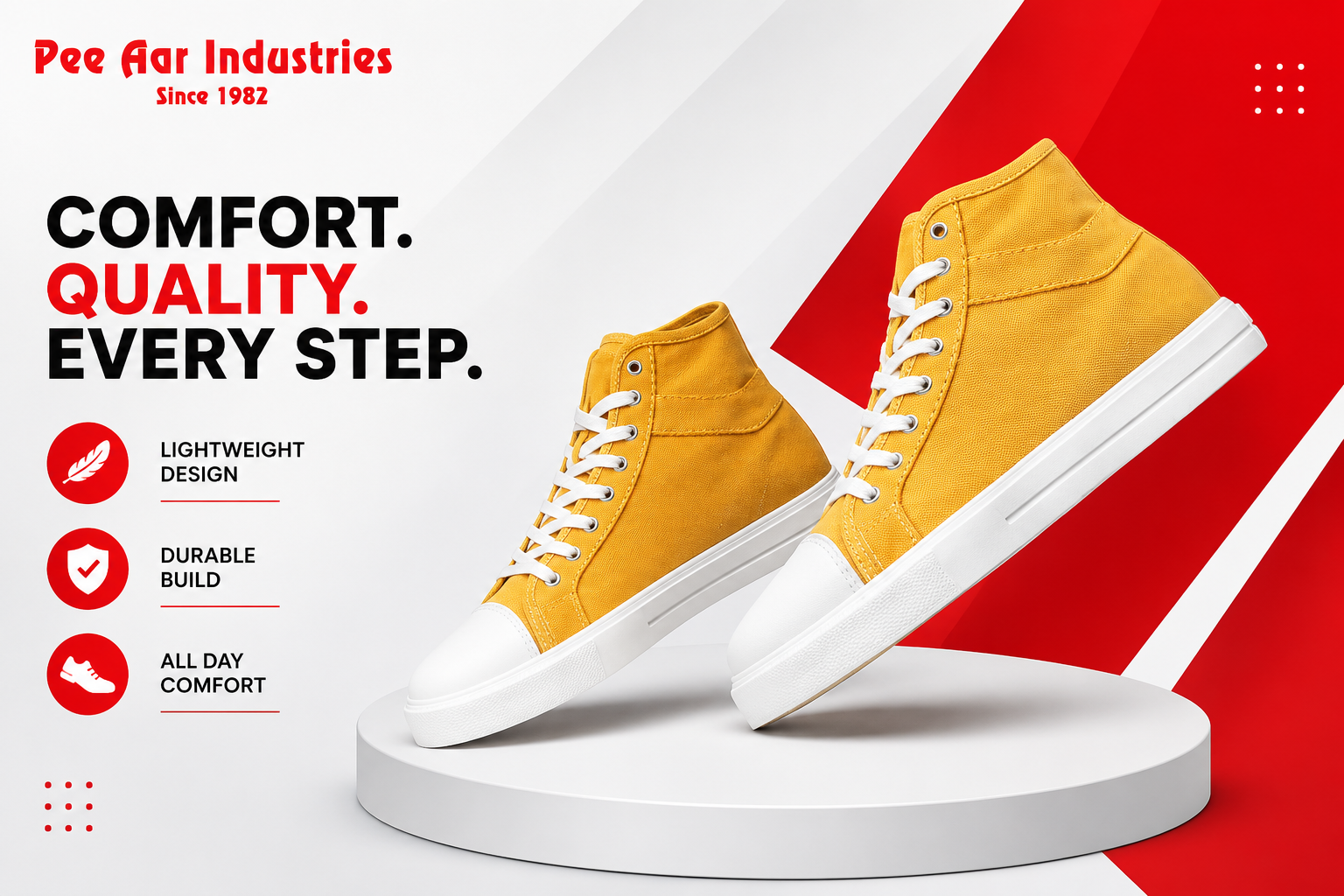
Manufacturing a pair of shoes involves much more than stitching together fabric and rubber. Behind every successful footwear brand lies careful planning, material sourcing, skilled craftsmanship, quality control, and an efficient production process. For entrepreneurs, retailers, and global footwear brands, understanding the shoe manufacturing cost in India is the first step toward building a profitable business.
Shoe manufacturers in India play a vital role in helping brands produce high-quality footwear at competitive prices. Whether you’re starting a new footwear brand or expanding your existing business, choosing experienced Shoe manufacturers in India can reduce costs while maintaining product quality.
At Pee Aar Industries, we work closely with startups, established retailers, fashion labels, and international brands to manufacture footwear that balances quality, affordability, and market appeal. Whether you are planning your first footwear collection or expanding an existing product line, knowing what influences manufacturing costs can help you make smarter decisions.
Why Shoe Manufacturers in India Are a Leading Choice
India ranks among the largest footwear producers in the world. Every year, millions of pairs are manufactured for domestic consumption and export markets alike. Brands from across Europe, North America, the Middle East, and Australia increasingly choose Indian manufacturers because they receive excellent quality without paying premium production costs.
Several factors contribute to India’s competitive advantage.
- Competitive labor expenses
- Skilled footwear artisans
- Easy access to leather, rubber, EVA, PU, and textile materials
- Modern manufacturing technology
- Strong export infrastructure
- Flexible production capacities
- Ability to produce both mass-market and premium footwear
These advantages significantly influence the overall footwear production cost, making India an attractive destination for businesses of every size.
What Is the Average Shoe Manufacturing Cost in India?
The answer depends on several factors because every shoe is built differently.
A simple pair of EVA slippers may cost only a few dollars to manufacture, while premium leather shoes or performance sneakers require advanced materials, multiple production stages, and detailed craftsmanship.
Generally, the shoe manufacturing cost in India depends on:
- Shoe category
- Material quality
- Sole construction
- Design complexity
- Order quantity
- Branding requirements
- Packaging specifications
- Testing and quality standards
Instead of focusing only on the price per pair, businesses should evaluate the complete value received from the manufacturer.
Key Factors That Influence Manufacturing Costs
Understanding cost drivers helps brands estimate budgets more accurately and avoid unnecessary expenses.
1. Raw Materials
Materials represent one of the biggest portions of manufacturing costs.
Common materials include:
- Genuine leather
- Synthetic leather
- Mesh fabrics
- Knitted uppers
- EVA
- Rubber
- PVC
- PU
- TPU
- Memory foam
- Insoles
- Linings
- Adhesives
Premium materials naturally increase pricing, but they also improve durability, comfort, and customer satisfaction.
Businesses targeting luxury markets generally invest more in superior materials, while value-focused brands balance affordability with acceptable quality.
2. Shoe Design Complexity
A minimalist sandal requires fewer production steps than a performance running shoe.
Additional design elements that increase manufacturing costs include:
- Multi-layer uppers
- Custom molds
- Decorative stitching
- Embroidery
- Printed graphics
- Reinforced heel counters
- Waterproof membranes
- Air cushioning systems
- Technical sole designs
Every additional component requires more labor and production time.
3. Type of Footwear
Different categories have different production requirements.
Examples include:
- Sports shoes
- School shoes
- Leather formal shoes
- Casual sneakers
- Safety shoes
- Sandals
- Slippers
- Industrial footwear
- Fashion footwear
For example, the sneaker manufacturing cost is usually higher than basic casual shoes because sneakers often include multiple layers, specialized midsoles, advanced cushioning, and premium finishing techniques.
4. Labor Costs
India offers one of the strongest combinations of skilled craftsmanship and competitive labor rates.
Experienced workers ensure:
- Better finishing
- Higher consistency
- Faster production
- Lower rejection rates
- Improved durability
Although labor contributes significantly to the total cost, efficient manufacturing reduces wastage and improves overall profitability.
5. Production Volume
Order quantity has a direct impact on pricing.
Small production runs usually have higher costs per pair because tooling, setup, and development expenses are spread across fewer units.
Large orders benefit from:
- Bulk material purchasing
- Faster production cycles
- Lower setup costs
- Improved manufacturing efficiency
This is one reason why growing brands often increase production once customer demand becomes consistent.
Tooling and Mold Development
If your footwear requires unique soles or exclusive designs, manufacturers may need to create custom molds.
These costs include:
- Sole molds
- Last development
- Prototype creation
- Sampling
- Product testing
Although tooling requires an upfront investment, it becomes more economical over larger production volumes.
Businesses looking to establish a unique market identity often view custom tooling as a worthwhile long-term investment.
Branding and Packaging
Today’s consumers expect much more than a quality product. Presentation matters.
Branding services may include:
- Printed insoles
- Logo embossing
- Woven labels
- Hang tags
- Branded shoeboxes
- Tissue paper
- QR codes
- Product inserts
These elements contribute to private label shoe pricing, especially for brands building premium retail experiences.
Professional branding increases perceived value while helping products stand out in competitive markets.
Quality Control and Testing
Reliable manufacturers never compromise on quality.
Inspection takes place throughout the production process, including:
- Raw material inspection
- Component testing
- Assembly inspection
- Finished product evaluation
- Packaging inspection
Some international buyers also request additional laboratory testing for durability, chemical compliance, slip resistance, and performance standards.
Although testing adds to production expenses, it significantly reduces product returns and protects brand reputation.
Shipping and Logistics
Manufacturing costs extend beyond factory production.
Businesses should also budget for:
- Inland transportation
- Export documentation
- Customs procedures
- Ocean freight
- Air freight
- Insurance
- Warehousing
Working with an experienced manufacturer simplifies logistics and minimizes costly delays.
How Order Customization Affects Costs
Customization gives brands a competitive advantage, but every modification influences pricing.
Common customization requests include:
- Exclusive colors
- Unique materials
- Custom soles
- Private labeling
- Premium packaging
- Special finishes
- Limited-edition collections
Many startups ask about custom shoe cost before launching their first collection. While customized products require greater investment than standard catalog designs, they help establish a stronger brand identity and create greater customer loyalty.
How to Reduce Shoe Manufacturing Costs Without Compromising Quality
Every footwear brand wants to keep production costs under control, but cutting corners often leads to dissatisfied customers and higher return rates. The smarter approach is to optimize the manufacturing process while maintaining consistent quality.
Here are a few proven ways to reduce overall footwear production cost:
Choose the Right Materials
Not every product requires premium-grade materials. An experienced manufacturer can recommend alternatives that deliver durability and comfort while staying within your target budget.
Increase Production Volume
Larger production runs typically lower the cost per pair. Bulk orders reduce setup time, improve manufacturing efficiency, and unlock better pricing on raw materials.
Standardize Components
Using common soles, insoles, eyelets, or laces across multiple shoe styles simplifies production and reduces inventory costs.
Plan Product Development Early
Last-minute design changes often result in additional sampling, delayed production, and unnecessary expenses. A well-defined product plan helps avoid costly revisions.
Work With an Experienced Manufacturer
A knowledgeable manufacturing partner can identify opportunities to improve efficiency, reduce material waste, and maintain consistent quality throughout production.
Understanding Private Label Shoe Pricing
Private label footwear has become one of the fastest-growing business models in the fashion industry. Instead of building a factory, brands collaborate with established manufacturers to produce shoes under their own name.
Several factors influence private label shoe pricing, including:
- Product design
- Material selection
- Minimum order quantity
- Branding requirements
- Packaging preferences
- Quality standards
- Certifications
- Shipping destination
For startups, private label manufacturing offers a practical way to enter the market with lower investment while maintaining full control over branding and marketing.
An experienced manufacturer also assists with sampling, design refinement, production planning, and quality assurance, making the journey much smoother for first-time footwear entrepreneurs.
Why Choosing the Right Manufacturer Matters
The lowest quotation is not always the best value. Successful footwear brands look beyond price and evaluate the manufacturer’s ability to deliver consistent quality, meet deadlines, and support long-term growth.
When selecting a manufacturing partner, consider the following:
- Years of industry experience
- Manufacturing capacity
- Product quality
- Material sourcing network
- Sampling capabilities
- Skilled workforce
- Modern production equipment
- Quality control procedures
- Export experience
- Transparent communication
Working with a reliable footwear factory in India gives brands confidence that every production run will meet expectations and strengthen customer trust.
Why Businesses Choose Pee Aar Industries
At Pee Aar Industries, manufacturing goes beyond producing shoes. We help businesses transform ideas into market-ready products that customers love to wear.
Our team understands that every brand has different goals. Some focus on affordability, while others prioritize premium craftsmanship or fashion-forward designs. We tailor our manufacturing solutions to meet those unique requirements.
Our capabilities include:
- Custom footwear manufacturing
- Private label production
- Sports shoes
- Casual footwear
- School shoes
- Safety shoes
- Fashion footwear
- Product development support
- Material sourcing
- Quality assurance
- Large-scale production
- Export-ready manufacturing
From concept development to final packaging, every stage is carefully managed to ensure quality, consistency, and timely delivery.
Whether you are launching a new footwear brand or expanding an established product range, Pee Aar Industries provides the expertise and production capability needed to support your growth.
Is Manufacturing Shoes in India Worth the Investment?
For most businesses, the answer is yes.
India offers an excellent balance of quality, affordability, skilled craftsmanship, and manufacturing capacity. Brands gain access to experienced professionals, reliable supply chains, and competitive pricing without compromising product standards.
While the exact shoe manufacturing cost in India depends on your design, materials, order quantity, and branding requirements, businesses that partner with an experienced manufacturer often achieve better long-term profitability.
Rather than focusing only on the initial production cost, consider the complete value of working with a trusted manufacturing partner. Consistent quality, efficient production, fewer product defects, and dependable delivery schedules all contribute to stronger customer satisfaction and improved business performance.
Final Thoughts
Understanding the shoe manufacturing cost in India is about much more than calculating the price of a single pair. Every decision, from material selection and design complexity to branding and production volume, influences the final cost and the success of your product in the marketplace.
If you are planning to launch a footwear brand, expand your product line, or explore private label opportunities, partnering with an experienced manufacturer can make all the difference. The right manufacturing partner will help you control costs, maintain quality, and bring your vision to life with confidence.
At Pee Aar Industries, we combine industry expertise, advanced manufacturing processes, and a customer-first approach to deliver footwear solutions that meet global standards. Whether your goal is producing affordable everyday shoes or premium collections, our team is committed to helping your brand succeed in a competitive market.
Choosing reliable Shoe manufacturers in India ensures better quality, competitive pricing, and long-term business growth. Partnering with experienced Shoe manufacturers in India helps brands succeed in both domestic and international markets.
FAQs
1. What is the average shoe manufacturing cost in India?
The average shoe manufacturing cost in India depends on the shoe type, materials, design complexity, production volume, and branding requirements. Basic footwear costs significantly less than premium leather or performance shoes.
2. What factors affect footwear production cost?
The main factors include raw materials, labor, manufacturing processes, sole construction, customization, packaging, quality testing, logistics, and order quantity. These collectively determine the overall footwear production cost.
3. Why is sneaker manufacturing cost higher than regular shoes?
The sneaker manufacturing cost is generally higher because sneakers often require multiple material layers, specialized midsoles, advanced cushioning systems, reinforced stitching, and more detailed assembly processes.
4. What determines private label shoe pricing?
Private label shoe pricing is influenced by product design, minimum order quantity, custom branding, packaging, material quality, tooling requirements, and shipping specifications.
5. Why should I choose Pee Aar Industries for footwear manufacturing?
Pee Aar Industries offers end-to-end footwear manufacturing services, including product development, custom designs, private label production, quality control, and scalable manufacturing solutions. Our experienced team helps businesses produce high-quality footwear while maintaining competitive production costs.