
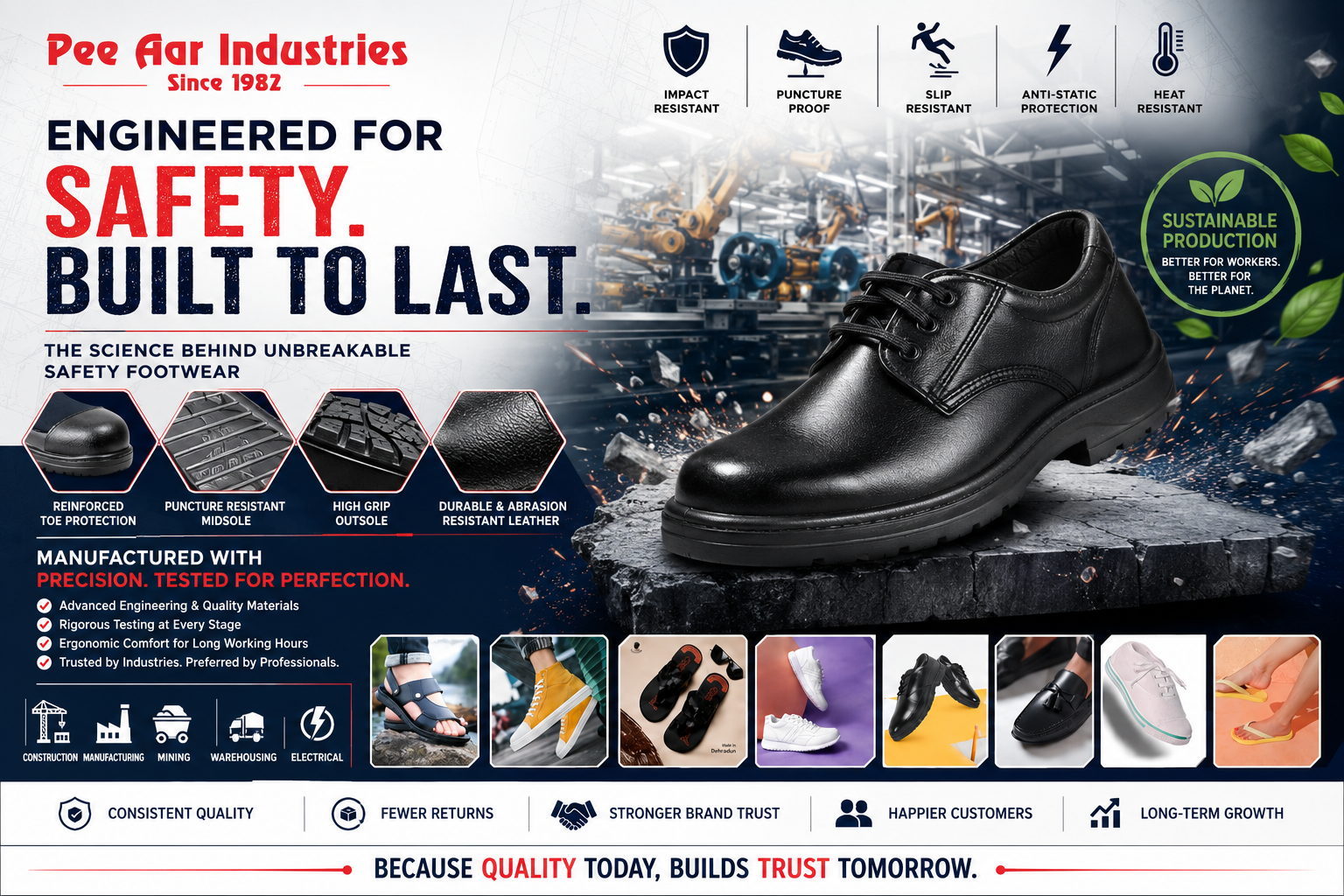
Unbreakable safety footwear has become an essential solution for modern industrial and commercial environments, where worker protection, durability, and comfort are critical requirements. In today’s demanding industrial and commercial environments, worker safety is no longer just a compliance requirement—it is a necessity driven by science, engineering, and innovation. One of the most critical components of workplace safety is footwear. From construction sites to manufacturing units, the need for unbreakable safety footwear has grown significantly, ensuring that workers remain protected against a wide range of hazards while maintaining comfort and efficiency throughout the day.
Understanding the Need for Protective Footwear
Work environments today expose individuals to multiple risks such as heavy falling objects, sharp materials, slippery surfaces, electrical hazards, and extreme temperatures. Ordinary footwear simply cannot withstand such conditions. This is where specialised safety shoes come into play, designed not just for protection but also for long-term durability and performance.
Modern safety footwear is the result of continuous research and development. Engineers and designers work together to create footwear that balances toughness with flexibility, ensuring that users can move freely without compromising on safety.
Unbreakable Safety Footwear: Built for Maximum Protection
The core of any strong safety shoe lies in the materials used. Advanced polymers, reinforced rubber, composite fibres, and treated leather are commonly used to enhance durability. These materials are selected after rigorous testing to ensure resistance against wear, tear, and environmental factors.
For instance, soles are often made using dual-density polyurethane or rubber compounds that provide both cushioning and resistance to abrasion. The upper part of the shoe is engineered to resist water, chemicals, and cuts, making it suitable for harsh working conditions.
Such innovations are part of advanced safety shoe technology, where every component is carefully designed to perform under stress. The aim is to create footwear that not only protects but also lasts longer, reducing the need for frequent replacements.
Structural Engineering: Built to Withstand Impact
One of the most critical aspects of safety footwear is its ability to withstand heavy impact. Toe protection is achieved through the use of steel, composite, or alloy toe caps that can resist significant force without breaking or deforming.
Additionally, the midsole is often reinforced with puncture-resistant plates made from steel or high-strength textiles. This prevents sharp objects like nails or metal shards from penetrating the shoe and causing injury.
These features are essential in developing durable industrial footwear solutions, especially in sectors like construction, mining, and heavy manufacturing. The structural integrity of the shoe ensures that it remains intact even under extreme pressure, offering consistent protection to the wearer.
Ergonomics and Comfort: The Hidden Science
While strength and durability are important, comfort cannot be ignored. Workers often spend long hours on their feet, and uncomfortable footwear can lead to fatigue, reduced productivity, and even long-term health issues.
Ergonomic design plays a key role here. Cushioning systems, arch support, breathable linings, and shock-absorbing soles are integrated into the design to enhance comfort. Lightweight materials are also used to reduce the overall weight of the shoe without compromising on safety.
This balance of comfort and protection is what defines high-performance safety shoes. They are engineered to support natural movement, reduce strain, and improve overall efficiency at the workplace.
Slip Resistance and Stability
Slips and falls are among the most common workplace accidents. To address this, safety footwear is designed with specialised outsoles that provide excellent grip on various surfaces, including wet, oily, and uneven terrains.
The tread patterns are scientifically developed to maximise traction while preventing the accumulation of debris. Anti-slip properties are tested under different conditions to ensure reliability in real-world scenarios.
Such features are critical in the development of impact-resistant work shoes, where stability and balance are just as important as protection. A stable footing can significantly reduce the risk of accidents, especially in high-risk environments.
Innovation in Protective Design
The evolution of safety footwear has led to the integration of smart design elements that enhance protection without adding bulk. Composite toe caps, for example, offer the same level of protection as steel but are lighter and non-conductive, making them suitable for electrical work environments.
Similarly, advancements in sole technology have introduced anti-static and heat-resistant properties, ensuring safety in specialised industries. Waterproof membranes and breathable fabrics further enhance usability across different climates.
These innovations are part of a broader approach towards engineered protective footwear, where every feature is designed with a specific purpose. The goal is to create footwear that adapts to the needs of the user while maintaining the highest safety standards.
Testing and Quality Assurance
Before reaching the market, safety footwear undergoes rigorous testing to ensure compliance with industry standards. Tests include impact resistance, compression resistance, slip resistance, and durability under extreme conditions.
Quality assurance processes ensure that every pair meets the required specifications. This consistency is crucial in maintaining trust and reliability, especially in industries where safety is non-negotiable.
The concept of unbreakable safety footwear is not just about strength—it is about reliability, consistency, and performance under pressure. Each pair is a result of extensive testing and continuous improvement.
Sustainability and Future Trends
With growing awareness around environmental responsibility, manufacturers are also focusing on sustainable practices. Eco-friendly materials, energy-efficient production processes, and recyclable components are being incorporated into safety footwear design.
The future of safety footwear lies in smart technology integration. Features like sensor-based monitoring, temperature control, and enhanced ergonomic designs are expected to redefine the industry. These advancements will further improve safety, comfort, and efficiency for workers across various sectors.
Powering Footwear Excellence with Trusted Manufacturing
Pee Aar Industries stands as a reliable force in the footwear manufacturing sector, backed by decades of experience since 1982. We combine advanced machinery, skilled craftsmanship, and a strong commitment to quality to deliver unbreakable safety footwear that meets evolving market demands. With a large-scale production capacity and a dedicated team, we ensure timely delivery and consistent performance. We believe in building long-term partnerships by offering customised solutions, transparent practices, and competitive pricing. Our focus on innovation and customer satisfaction allows us to support brands in scaling efficiently while we take care of seamless production and dependable results.
Conclusion
The journey of safety footwear from basic protective gear to highly engineered products is a testament to the power of science and innovation. Every element, from material selection to structural design, is carefully crafted to provide maximum protection and comfort.
In a world where workplace hazards are constantly evolving, the demand for reliable and durable footwear continues to grow. The development of unbreakable safety footwear reflects a commitment to safeguarding lives while enhancing performance and productivity. It is not just a product—it is a critical investment in safety, efficiency, and long-term well-being.
FAQ Section
1. What makes safety footwear “unbreakable”?
Unbreakable safety footwear is designed using advanced materials such as reinforced steel toe caps, composite fibers, puncture-resistant midsoles, and durable rubber outsoles. These components work together to protect workers from impact, compression, sharp objects, and workplace hazards while maintaining long-lasting performance.
2. How do safety shoes protect workers from workplace injuries?
Safety shoes protect workers by shielding their feet from falling objects, punctures, slips, electrical risks, and extreme environmental conditions. Features like impact-resistant toe caps, anti-slip soles, and shock-absorbing midsoles significantly reduce the risk of workplace accidents and injuries.
3. Are composite toe safety shoes as strong as steel toe shoes?
Yes. Composite toe safety shoes provide protection levels comparable to steel toe shoes while being lighter in weight. They are also non-conductive and metal-free, making them ideal for electrical, airport, and security-sensitive environments.
4. What industries benefit most from durable safety footwear?
Industries such as construction, manufacturing, mining, logistics, warehousing, oil and gas, engineering, and transportation rely heavily on durable safety footwear to protect workers from occupational hazards and ensure compliance with safety regulations.
5. Why is slip resistance important in industrial safety shoes?
Slip resistance helps prevent falls caused by wet, oily, or uneven surfaces. Safety shoes with specially engineered tread patterns provide superior grip and stability, reducing one of the most common causes of workplace injuries.
Add a Comment